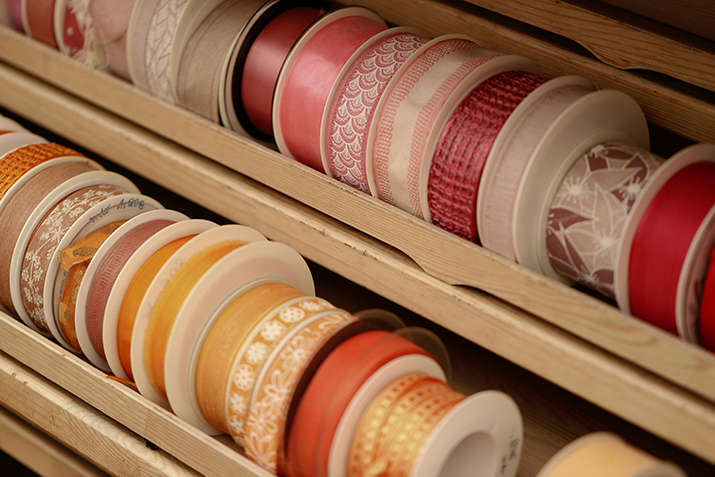
Every wrapped gift ends the same way: paper folded and taped, then finished with a ribbon, a bow, or both. That last step is the one customers actually see when the gift changes hands, and it’s the fastest, least expensive way to make a wrap job look complete. For bookstores, candy stores, jewelers, boutiques, florists, and baby and children’s stores running a wrap counter, ribbon and bows aren’t an afterthought category — they’re two of the highest-turnover items in the entire accessories line.
This guide covers what’s worth stocking, how the ribbon types and bow formats differ, how to size a reorder, and how to set up a station that keeps your wrap counter moving during a rush — a reference to come back to no matter what season or occasion you’re stocking for next.
Why Ribbon and Bows Carry Outsized Weight at the Counter
Ribbon and bows are the two top-selling categories under Accessories, and the reason is structural, not seasonal: they get used on nearly every wrapped gift, they’re inexpensive relative to the paper, and they run low faster than a roll of solid or patterned wrap. A store that reorders paper twice a season is often reordering ribbon and bows every four to six weeks.
That reorder frequency means ribbon and bows deserve their own line in a stocking plan, not a leftover slot in a general accessories order. A store that’s short on ribbon on a Saturday afternoon has a real problem: the gift still has to leave the counter finished, and an improvised substitute undoes the effect the wrapping paper was supposed to create.
Getting ribbon and bows right also compounds. A ribbon color that clashes with a paper pattern, or a bow that’s the wrong scale for the box, makes an otherwise good wrap job look unfinished. The pairing matters as much as either piece on its own — which is why the sections below cover types and formats together with how they’re actually used at the counter.
There’s a margin case here too. For stores charging a flat wrap fee, ribbon and bows are the cheapest inputs in the whole service — a few cents of ribbon and a bow that costs less than a dollar, against a $3 to $6 wrap charge. Getting the assortment right doesn’t just make the counter run smoother; it protects the margin on a service that’s otherwise easy to underprice.
Ribbon Types Worth Stocking
Wholesale ribbon comes in enough materials and finishes that it’s easy to over-order the wrong mix. Most specialty retailers do fine with four or five core types rather than trying to carry everything.
| Ribbon Type | Best For | Notes |
|---|---|---|
| Splendorette Curling Ribbon | Everyday wrap, balloons, quick finishing bows | Curls easily by hand, lowest cost per foot, wide color range |
| Cotton Curling Ribbon | Kraft and natural-paper pairings | Matte finish reads as more premium than poly curling |
| Double Face Satin Ribbon | Weddings, formal gifts, jewelry boxes | Finished look on both sides — no “wrong side” showing |
| Grosgrain Ribbon | Boutique and higher-end gifts | Ribbed texture holds a bow shape well, resists slipping on box corners |
| Wraphia / Pearl Wraphia | Floral, kraft, rustic-styled gifts | Raffia-look ribbon; pearl finish adds shine without going glossy |
| Asiana Ribbon | Florist arrangements, gift baskets | Sheer, lightweight, a florist-trade standard |
| Tulle / Sparkle Tulle | Baby gifts, showers, kids’ occasions | Adds volume without weight; sparkle version doubles as a bow-topper accent |
| Jute Cord | Kraft wrap, rustic or natural presentation | Pairs with the eco-sensible kraft story; not a substitute for satin on formal gifts |
| Poly Ribbon | High-volume everyday wrap | Lowest cost option for counters running heavy daily wrap volume |
A practical starting mix for a store new to stocking ribbon seriously: one curling ribbon (Splendorette covers the widest range of everyday use), one satin or grosgrain for anything formal, and one wraphia or jute for kraft and natural pairings. That’s three ribbon types, and in most color assortments, enough range to match almost anything coming through the wrap counter.
Bow Formats and When Each Makes Sense
Bows split into two functional categories: bows that come pre-shaped and ready to apply, and bows or bow-substitutes that a wrapper builds at the counter by hand. Both have a place, and the right mix depends on how much time your staff has per gift during a rush.
| Bow Format | Speed at Counter | Best For |
|---|---|---|
| Poly Star Bows | Fastest — peel and stick | Everyday wrap, high-volume counters |
| Glitter Star Bows | Fastest — peel and stick | Holiday and celebration gifts needing extra shine |
| Poly Pom Pom Bows | Fast — pre-shaped | Playful, casual gifts; kids’ and baby items |
| Pom Pom Pull Bows | Fast — pulls open in seconds | Volume counters that still want a fuller, dimensional look |
| Bow Magic | Moderate — shaped by hand from ribbon | Custom color-matching to the exact paper on hand |
| Glitter Perfect Bows | Fastest — peel and stick | Upscale gifts wanting shine without a hand-tying step |
| Stretch Loops | Moderate — stretched and shaped by hand | Distinctive, dimensional look; slower per gift but memorable |
| Elasti Loops | Moderate — stretched and shaped by hand | Similar to stretch loops; favored where staff want more loop control |
Pull bows and pre-tied formats — poly star, glitter star, glitter perfect — are the right call for any counter that needs speed. A candy store during a holiday rush or a bookstore during a graduation weekend doesn’t have time for hand-tied bows on every gift. Bow Magic, stretch loops, and elasti loops earn their place when a store wants a more distinctive, higher-end look and has the staff time to build it, which tends to be jewelers and boutiques running lower daily volume but higher average gift value.
Most stores land on two formats: one fast, pre-shaped bow for volume days, and one hand-built or premium format for gifts that warrant the extra few minutes. Stocking three or four formats “just in case” usually means slower-moving inventory sitting in a drawer.
Matching Ribbon and Bow to Paper and Occasion
The pairing logic is straightforward once it’s spelled out, and it’s worth training wrap-counter staff on it directly rather than leaving it to instinct. Satin and grosgrain ribbon read as formal — they belong with solid, foil, or wedding-pattern paper. Curling ribbon and pull bows read as everyday and celebratory — they belong with colorful, patterned, or kids’-focused paper. Wraphia, jute, and cotton curling read as natural — they belong with kraft.
A few pairings come up often enough to call out directly: gold or champagne satin ribbon with ivory or solid wedding paper, sheer asiana ribbon with floral patterns, sparkle tulle with baby and shower gifts, and jute or wraphia with kraft. These aren’t rules so much as defaults — starting points that keep a wrap counter from over-thinking every gift while still looking intentional.
Occasion-specific pairings — bow and ribbon color choices for Valentine’s, Hanukkah, and other calendar moments — get their own treatment in the seasonal posts on this blog as they publish. If a specific occasion isn’t covered yet, the type and format tables above are a reliable starting point.
How Many Colors to Stock
Color range is where a ribbon-and-bow order can quietly balloon. It’s tempting to order one of everything, but most counters are better served by depth in a short color list than breadth across dozens of shades that each move slowly.
A workable core for a general gift retailer is five to seven colors: white or ivory, red, gold, a green, and two or three seasonal or brand-aligned accents. Jewelers and boutiques leaning formal can trim that list further — white, gold, and one accent color covers most of what crosses a jewelry counter. Florists and candy stores that see more color variety in the products themselves often want a slightly wider range, since the ribbon needs to coordinate with whatever’s already colorful in the box.
The same logic applies to bows: two or three colors in your fast, pre-tied format will cover most gifts, with a wider range reserved for the slower-moving premium format where a customer might specifically ask for a shade to match.
How Much Ribbon and Bows to Stock
Ribbon and bows move faster than paper, and the mistake most stores make is sizing the reorder off gut feel rather than actual wrap volume. A useful starting frame:
- Estimate ribbon by the roll, not the gift. Most rolls run 100 to 500 yards depending on type; a mid-volume counter wrapping 15 to 25 gifts a day typically uses one to two rolls of its primary curling or satin ribbon per week.
- Order bows by the case, sized to your busiest week, not your average week. A pull-bow case that lasts three average weeks might empty in four days during a holiday peak.
- Build in a 20 to 30 percent buffer above your calculated average for any month with a known volume spike — Valentine’s, Mother’s Day, graduation, and the fourth quarter all count.
- Reorder before you’re down to your last case or roll of a color, not after. A 7 to 10 business day turnaround is manageable if you reorder at the halfway point; it’s a problem if you wait until you’re out.
Free shipping on orders over $200 makes it easy to consolidate a ribbon-and-bow reorder with other accessories — tissue paper, a fresh case of bags, or a paper restock — and clear the threshold in a single order rather than paying shipping on several small ones. Ribbon and bows alone often get a store partway there; adding one more accessory category typically closes the gap.
Setting Up Your Bow and Ribbon Station
A wrap counter with ribbon rolls stacked loose in a drawer loses time on every single gift — someone has to dig for the right color, unspool by hand, and re-coil what’s left over. A ribbon rack solves this at the point of use: rolls mount on a dispenser bar, colors stay visible and in order, and a wrapper can pull, cut, and move to the next gift without breaking rhythm.
The setup that works for most counters: a wall- or counter-mounted dispenser sized for 6 to 10 ribbon rolls, positioned within arm’s reach of the wrap surface, with bows stored in a bin or shallow tray directly below or beside it. Group ribbon by finish rather than color — satin together, curling together, wraphia and jute together — so a wrapper matching to a specific paper type can scan one section instead of the whole rack.
If your store hasn’t set up a dedicated station yet, that’s worth doing before the next reorder lands rather than after. A full walkthrough of counter layout — dispensers, tissue access, and workflow for a busy Saturday — is covered in the wrap station setup guide, and dispensers themselves are available in the dispensers category.
Buying Wholesale Ribbon and Bows Without the Guesswork
Ribbon and bows are a category where price differences between one order and the next are easy to overlook — a few cents per yard or per bow doesn’t look like much until it’s multiplied across a full-case reorder. Mr. Gift Wrap’s lowest prices guarantee applies here the same way it does across the paper lines: if you find a lower published, non-promotional total cost within 30 days of your purchase, Mr. Gift Wrap will verify it and refund 150% of the difference. That’s worth knowing specifically for accessories, since a lower sticker price elsewhere can quietly disappear once shipping and handling get added on.
Free shipping on orders over $200 removes the guesswork from timing a reorder around a shipping minimum, and outstanding customer service means a real person is available to help size a first ribbon-and-bow order or sort out a shipment that came in short a case. For a store building out this category for the first time, that conversation is often more useful than any stocking guide — a quick call about typical weekly wrap volume and busiest season can save several rounds of over- or under-ordering.
Ribbon and bows also benefit from quantity discounts on larger case orders, which is worth factoring into how you size a reorder. A store that buys a slightly larger case of its primary curling ribbon or pull bow twice a year, instead of a smaller case every few weeks, can come out ahead on unit cost even before the free shipping threshold is part of the math.
If You’re Building This Category from Scratch
Stores that have historically treated ribbon and bows as an afterthought — a drawer of leftover spools and a box of assorted bows — can get to a workable starting assortment quickly:
- Two ribbon types: one curling ribbon (Splendorette covers the widest everyday range) and one satin or grosgrain for formal gifts.
- One fast bow format for volume days — poly star or a pull-bow format — in your two or three most-used colors.
- One premium or hand-built format — Bow Magic, stretch loops, or a glitter finish — for gifts that warrant it.
- A small dispenser or rack, even a modest one, rather than loose rolls in a drawer.
That’s a counter that can finish almost any gift that comes through the door without over-committing to inventory in a category you’re still learning the demand for. As reorder patterns become clear — which colors move, which formats get used, how fast a roll actually depletes — the assortment can grow with confidence instead of guesswork.
Ready to Stock Your Wrap Counter?
Ribbon and bows are the finishing touch on every gift that leaves your counter, and they’re also some of the fastest-moving, most frequently reordered items in your accessories lineup. Getting the right mix of types and formats in stock — and set up where your staff can actually reach it — pays off on the busiest day of the season, not just the easy ones.
Shop wholesale ribbon and gift bows, and build a reorder that clears free shipping in a single order.